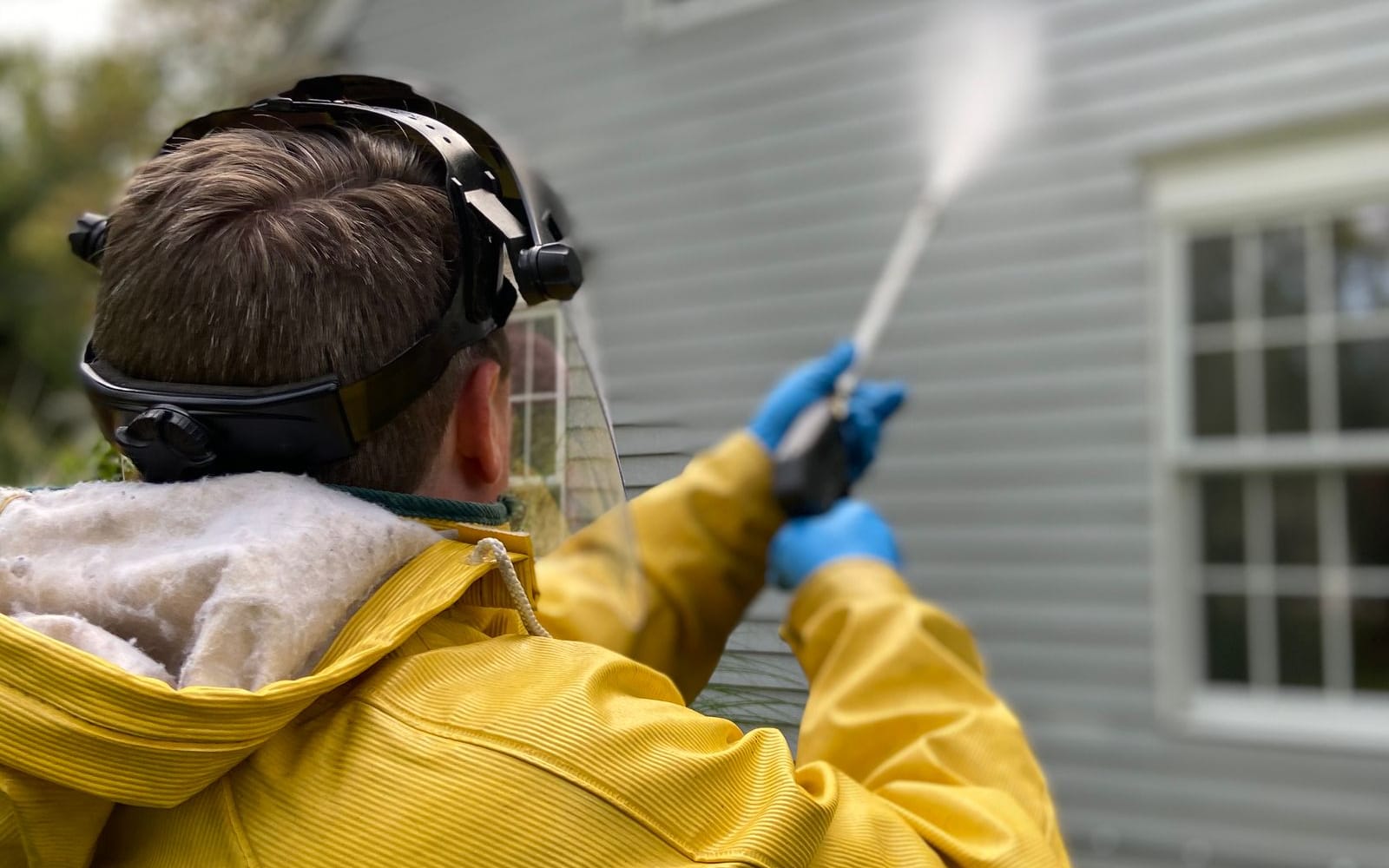
What a pressure washing quote should include
Start with the method, because it is what the homeowner is quietly worried about. Say low-pressure house wash with a mildew treatment, and say that high pressure only touches concrete. That sentence tells them you will not strip paint or drive water behind the siding.
Give every surface a basis: two story house, driveway up to 800 square feet, deck by the square foot, fence per 100 feet. A number with a size next to it reads as measured. List what you protect and how, plants pre-wet and rinsed, outlets covered, cars moved, and what is not included, so roof or window cleaning does not become an argument on the day. Finish with a line about stains: oil on older concrete lifts but rarely disappears, and green on a shaded north wall comes back sooner.
How to price pressure washing jobs
Most washers price by the surface with the size stated, not by the hour. A one story house wash runs about $250 to $450 in most markets and a two story house $400 to $800, with the top of the range for wrap-around soffits, heavy mildew, or a third story. Driveways and walkways go by area at roughly $0.10 to $0.25 per square foot, so a 600 to 800 square foot driveway lands between $125 and $250. Decks carry the highest per-foot number because of the brightener and the care it takes: $0.50 to $1.50 per square foot, or $200 to $500 for a normal backyard deck. Roof soft washing is its own tier at $450 to $1,200, set by roof size, pitch, and how much algae there is, because the chemistry costs more and setup is slower. Fences run about $1 to $2 per linear foot, and the sample quotes them per 100 feet so the client can count panels.
Height, access, and time since the last cleaning move the number: a third story or a steep lot adds ladder time, and a house left five years takes two passes. Rural and southern markets run lower and dense metro areas higher, sometimes by a third, so check these ranges against the companies your customers already call.
How to price the optional items
The sample has three optional lines, each set the way it is on purpose. Deck wash and brighten is on by default: it is the most common add-on, the most visible result, and the line most people would have asked about anyway.
Roof soft wash is off by default at its real price. It is a bigger decision, the number is large next to a house wash, and forcing it into the total causes sticker shock before they read a word. Fence is off by default with the quantity editable, since only some yards have one. The rule behind all three: on by default when most clients take it and the price is modest, off when it is expensive or applies to a minority of jobs. The optional lines are how the client builds their own day, and the total climbs as they do.
Mistakes that lose pressure washing jobs
Quoting the house and mentioning the deck in person. If it is not on the page, it is not sold, and the client cannot say yes to something they have to phone you about. Every surface you would wash goes on the quote as a line.
Selling on PSI. Homeowners do not know what 3,000 PSI means, and the ones who do are worried you will etch their concrete. Sell the method and the result; keep the machine specs for the truck lettering.
Leaving the quote open indefinitely. A spring quote with no expiry sits in an inbox until July, when your calendar is full and their mildew is worse. The sample expires in 14 days.
Quoting from the street. An estimate that misses the back of the house or a deck you could not see becomes a change of price on the day, and that is how you lose the review. Walk the property or ask for photos of every side.
Deposit and payment
Most residential washers take payment on completion and skip the deposit, and the sample ships that way: the client accepts and signs, nothing is due until the work is done. Turn a deposit on for commercial work, a rented lift, or a first-time customer on a large multi-surface day. When the work is finished, request the balance from the proposal and the client pays by card from the same page, or you record the check when it arrives, so the quote and the payment stay together.
Sending it and following up
Send the quote the same day you look at the house, while the visit is fresh for both of you. Fourteen days is the right expiry for residential washing: enough to compare, short enough that the season does not slip. A reminder goes out on day three and again on day seven if it has not been signed, which is usually what turns a silent estimate into a booked one. You can see when the quote was opened and which sections held their attention, so if they lingered on the roof line, lead with that on the follow-up call.
Questions
- Should I charge by square foot or by surface?
- By surface, with the size in the description. A line that reads driveway and walkway, up to 800 square feet, is clear, lets you round to a number people trust, and still shows the basis.
- How do I sell roof cleaning without scaring people?
- Call it a soft wash, say plainly that no pressure touches the shingles, and make it optional at its real price. The people who came to you because of the black streaks will turn it on themselves; nobody else feels pushed.
- Do I need a deposit for residential pressure washing?
- Usually not. Payment on completion is the norm and the sample follows it. The signed scope is what protects you: it fixes what was included, what was not, and which stains may remain, before anyone is standing in the driveway disagreeing.
- What should I say about oil and rust stains?
- That they lift but may not disappear. Oil soaked into older concrete leaves a shadow after cleaning, and rust from irrigation water needs a different chemical at a different price. One sentence in the terms manages it; a surprise on the day does not.
- Can the customer add the deck after signing?
- They toggle the optional lines before they sign and the total updates as they do. After signing, the scope is fixed. To add the deck later, send a change order for it and they sign that too, so the paperwork matches the work.